
Good exam support starts with listening, not adding pressure. Learning how to provide emotional support during exams means making room for a child’s worries, helping them build a manageable revision routine, and reminding them that their worth is not measured by a result.
It’s natural to want to ease exam stress quickly, especially when your child seems anxious, loses focus or puts off revision. But they may need calm reassurance more than another reminder to study. A steady, understanding presence can help them feel less alone and more confident about taking the next step.
These four approaches show how to talk about exam stress, plan study time and breaks, and offer reassurance before and after a paper. With support, your child can learn to navigate exams as a challenge, not as a measure of who they are.
Key Takeaways
- Make space for your child to share exam worries, and listen before trying to solve them.
- Notice when stress starts affecting sleep, appetite, mood or everyday activities.
- Build a realistic revision routine that leaves room for breaks, meals and rest.
- Recognise effort and remind your child that exam results do not define their worth.
1. Encouraging communication about emotions
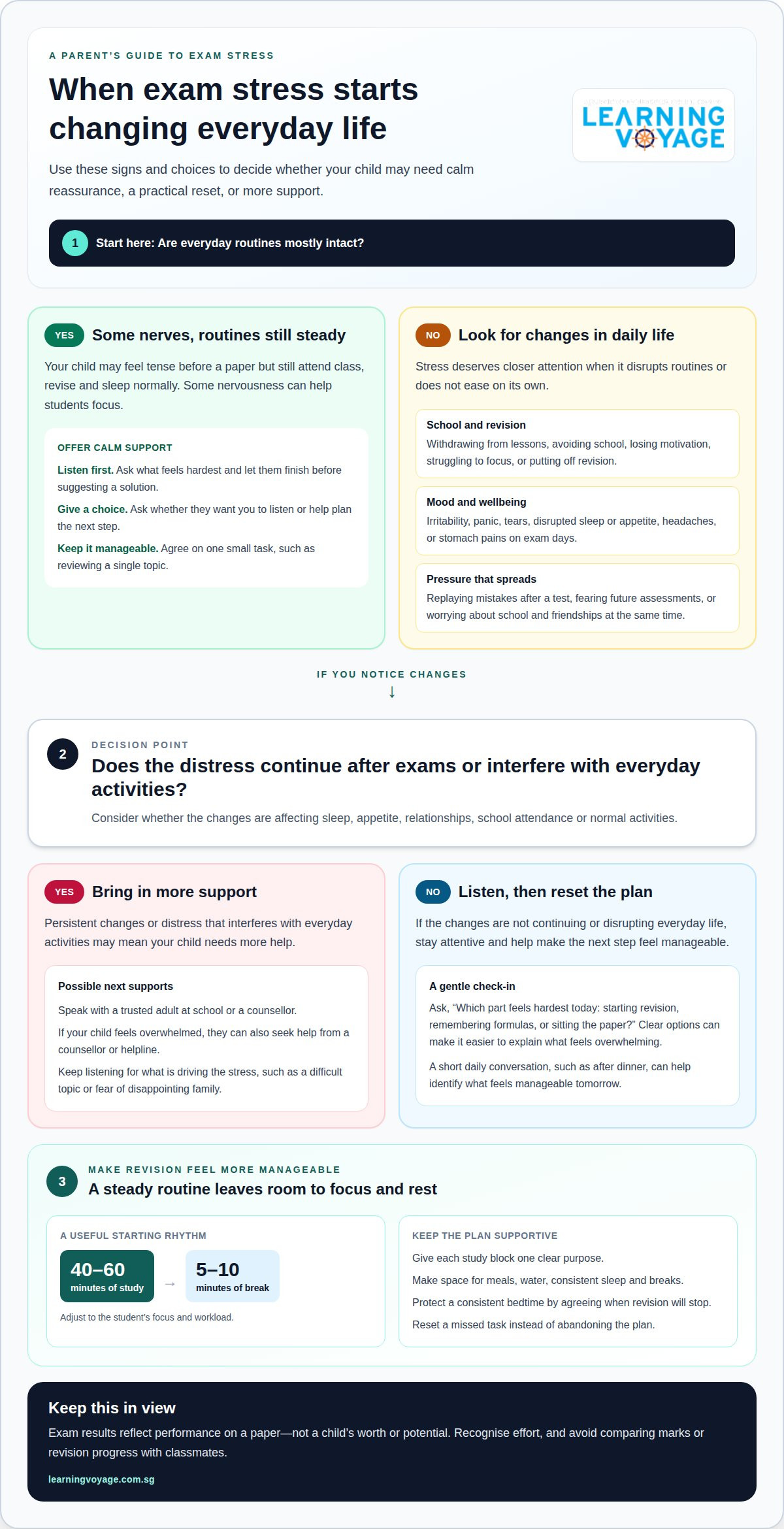
Parents can support students during exams by making space for an honest conversation and listening before trying to fix the problem. Ask, “Which part feels hardest today: starting revision, remembering formulas, or sitting the paper?” Clear options can help your child explain what feels overwhelming. Keep your voice calm, and let them finish before offering suggestions.
Avoid saying, “Don’t worry,” “You’re overreacting,” or “Your friend has studied more.” These phrases can dismiss your child’s feelings or add pressure through comparison. Instead, try: “I can see this feels difficult. Would you like me to listen or help plan your next step?” This acknowledges their stress and lets them choose the support they need.
To understand how to provide emotional support during exams, focus on small, practical acts. Ask whether your child would like help prioritising revision, a quiet companion nearby, or time away from their books. If they feel stuck, agree on one manageable task, such as reviewing a single topic. Recognise the effort it takes to begin, not just correct answers or marks.
- Set a short daily check-in, such as talking after dinner, and ask what feels manageable tomorrow.
- Offer a 5–10-minute break after a focused study session, rather than demanding that your child keep going.
- Help protect a consistent bedtime by agreeing when revision will stop for the evening.
Healthy routines also support emotional wellbeing. Keep water available, offer regular meals, and suggest a short walk or stretch if your child has been sitting for a long time. Ask before moving their desk or reorganising their books, as unexpected changes can add frustration when they already feel under pressure. A steady routine leaves room to rest, focus and build confidence at their own pace.
2. What Is Exam Stress in Students?
Exam stress is a response to assessment pressure, and some nervousness can help students focus. A student may feel tense before a Mathematics paper but still attend class, revise and sleep normally. Concern grows when stress disrupts daily life, rather than passing on its own. Look for changes in behaviour, mood and wellbeing throughout the exam period.
Stress may centre on a specific assessment, such as an upcoming GCE O-Level paper. Anxiety can also continue after exams or affect other parts of a student’s life. They might keep replaying mistakes after a test, fear every future assessment, or worry about school and friendships at the same time. These patterns deserve attention, especially when distress does not ease after exams.
Notice what changes. A student who once participated in lessons may withdraw, avoid school or lose motivation to revise. Others may struggle to focus, forget material during a paper, become irritable, or complain of headaches and stomach pains on exam days. Some put off revision; others study excessively because they fear falling behind. Comparing marks or revision progress with classmates can deepen self-doubt.
Fear of poor results, high expectations, difficult topics and comparisons with peers can all contribute to stress. Ask which part feels hardest, then listen for a specific concern, such as not understanding a topic or fearing they will disappoint family. This can help separate a practical study problem from wider distress. Keep expectations realistic and recognise the skills your child is developing, not only their marks.
Take persistent changes seriously. Panic, tears, disrupted sleep or appetite, strained relationships, and distress that continues after exams may mean a student needs more support. If these signs interfere with everyday activities, speak with a trusted adult at school or a counsellor. A student who feels overwhelmed can also seek help from a counsellor or helpline. Early support can help clarify what is driving the stress and which coping techniques may help.
3. Helping students organise revision, rest and meals
A clear plan can make a demanding exam schedule feel more manageable. Start with the dates on the school timetable, then list the topics your child needs to cover. For a Singapore student preparing for GCE O-Level Mathematics, this might mean setting aside time for a challenging topic before attempting mixed questions. A visible plan breaks a broad task into smaller steps.
Students can manage exam anxiety by balancing focused revision with breaks, sleep and regular meals. A useful starting point is 40–60 minutes of study followed by a 5–10-minute break, adjusted to the student’s focus and workload.
Give each study block one clear purpose, such as correcting a practice paper or summarising a topic. Beginning with an easier task can build confidence before moving to harder questions. If anxiety rises, the student can try the 5, 4, 3, 2, 1 grounding technique: notice things they can see, feel, hear, smell and taste. Keep the plan realistic; an overfilled timetable can add pressure instead of direction.
Make rest part of the schedule, rather than something that happens only after every task is complete. Consistent sleep supports memory, while a walk, stretching or another enjoyable activity offers a change of pace. Encourage water and regular meals instead of late-night study that cuts into food or rest. Some students prefer a quiet study space; others may find a library or group study more suitable.
4. Reassuring children regardless of exam results
A child’s marks reflect their performance on a paper, not their value or potential. After a challenging Mathematics exam, listen as they describe what felt manageable and what unsettled them. Acknowledge their effort, and avoid comparing answers with classmates or dwelling on every possible mistake. If they think they did poorly, remind them that there will be future opportunities to learn, and discuss what they might try differently next time.
The evening before an exam, help your child prepare practical details: pack the required stationery, review the timetable and confirm where the paper will take place. Talk about what the setting may be like, including quiet conditions, visitors or external invigilators. Knowing what to expect can make the environment feel less unfamiliar. Keep the evening calm rather than introducing a new study plan or expecting a last-minute marathon.
Sleep is part of preparation, not a reward for finishing every revision task. Agree on a stopping point for study and help your child follow a familiar bedtime routine. If they worry about forgetting something, write it down and choose one useful action for the morning. This can stop late-night cramming from taking over the time they need to rest.
Look out for distress that goes beyond normal exam nerves. Headaches, stomach pains, poor sleep, reduced appetite, panic or avoiding school can signal that pressure is affecting daily life. Take persistent signs seriously, especially if they continue after exams. A trusted adult at school or a counsellor can help your child explain what is happening and find suitable support.
Results day calls for steady encouragement, too. Let your child speak before discussing grades, and recognise the work they put into learning, whatever the outcome. If they feel disappointed, listen first, then help them identify a next step, such as reviewing feedback or asking a teacher about a difficult topic. This helps children navigate setbacks and see education as a continuing journey, not a single result.
Learning Voyage Education Centre
Learning Voyage Education Centre supports students whose exam stress is made harder by gaps in Mathematics or Science. Its small-group tuition helps them work through challenging topics, practise key skills and approach revision with greater clarity. The “Plug-the-Gaps” technique identifies specific learning hurdles and addresses them through clear explanations and targeted practice, helping students build understanding step by step.
For students preparing for Singapore examinations, relevant options include Secondary 3 and Secondary 4 E-Mathematics or A-Mathematics Tuition. This academic support complements the emotional guidance parents provide at home; it does not replace listening, rest or reassurance. A clearer grasp of difficult material can give students a more secure course through revision.
If you’d like to discuss suitable support for your child, contact Learning Voyage Education Centre.
Make the next step feel manageable
The support a student remembers may be a calm conversation after a difficult paper, or a parent staying nearby while they work through uncertainty. These small moments can shape how they face future challenges and help them see that asking for help is part of learning, not a sign of failure.
As you consider how to provide emotional support during exams, focus on building trust that lasts beyond the assessment period. Your child doesn’t need you to remove every obstacle. They need to know they can speak honestly, learn from setbacks and keep moving forward with support.
If additional academic guidance would help your child approach Mathematics with greater clarity, contact Learning Voyage Education Centre to discuss the next step. Keep encouraging progress at your child’s pace; confidence grows through each thoughtful step forward.
Frequently Asked Questions
What Is Exam Stress in Students?
Exam stress is emotional strain linked to the demands and perceived stakes of an assessment. It doesn’t prove that a student lacks ability or hasn’t worked hard. Even a well-prepared student may feel pressure if they believe the result will affect future choices. Use “exam stress” to describe what the student is experiencing, not as a diagnosis or judgement about their character.
Why is this important?
The way adults respond can shape how students approach challenges beyond the exam room. If every setback becomes a verdict on ability, a student may be less willing to try unfamiliar work or admit uncertainty. Treating an exam as one part of a longer education journey leaves room to learn from mistakes. It also helps parents model a measured response to pressure and disappointment.
What should you say to comfort someone who is stressed about exams?
Try a phrase that recognises the pressure without predicting the outcome: “I know this matters to you, and you don’t have to figure everything out at once.” If your child wants company, stay nearby without turning the moment into an interview. If they prefer space, respect that choice and agree on a time to check in later.
What practical support helps students prepare for exams without adding pressure?
Reduce avoidable demands around study time by agreeing on household routines in advance. For example, family members can avoid interrupting a planned practice session and choose another time to discuss exams. Set aside a shared period when nobody needs to talk about school. This gives your child room to focus and a clear break from assessment talk.
How can you tell if exam stress is affecting a student’s mental health?
Rather than focusing on one difficult moment, notice whether a change keeps appearing and what tends to happen beforehand. A brief private note of the situation, your child’s response and what helped can make patterns easier to discuss. Share your observations calmly, without labelling them. If your child wants help understanding the pattern, involve a suitable trusted adult.
How can parents balance encouragement with realistic expectations during exam season?
Ask your child what feels achievable before setting expectations. Discuss what matters most to them, what support they want from you and which parts of preparation they can influence. This makes goal-setting a shared conversation rather than a demand imposed from outside. Revisit the agreement if circumstances change, rather than treating an earlier target as fixed.