



Online vs Physical PSLE Math Tuition: Which Works Better?
Many families try to understand the best way to strengthen a child’s grasp of PSLE Math, and this choice shapes how the child handles new ideas. Learning grows steadily when the method supports the child’s sense of control, so families study each path with care. Online PSLE Math tuition in Singapore and physical tuition centres stand out because both options guide learning in clear ways.
Each method helps children process ideas with confidence. Some children handle change quickly, while others need structure to stay focused. This journey becomes smoother when families explore the strengths of each model and understand how these strengths shape steady progress.
How Online PSLE Math Tuition Works?
Online PSLE Math tuition in Singapore provides a learning route that blends structure with flexibility. Children follow clear steps through virtual tools that guide them through each topic. The syllabus keeps attention steady because lessons move through small pieces of information in a controlled way. This helps children stay on track as they explore new ideas at home.
Online lessons support evident progress because children handle tasks that highlight patterns, methods, and strategies. Digital tools create space for repeated practice, which strengthens skills through simple routines. The points below show how online learning grows stronger through focused features.
Key Points:
- Online lessons give children direct guidance through easy-to-use features.
- The platform supports progress through recorded steps and clear explanations.
- Virtual tools help children move between tasks without losing focus.
These points show how online learning effectiveness continues to rise as platforms grow more advanced. Each element guides the child through a structured route that strengthens understanding. The online setting also gives families space to adjust schedules, which supports revision across subjects, especially when children prepare for topics like O-level Science later in their journey.
How Physical Tuition Centres Guide Learning?
Physical tuition centres create a focused setting where children handle PSLE Math in a guided space. The classroom tone encourages effort, and this shift builds discipline. Children enter a place designed for attention, and this design helps them follow the tutor’s steps with confidence. The guided movement through topics supports clear thinking as lessons unfold.
Physical classrooms shape strong habits because tutors explain methods in real time, and children respond through questions that sharpen understanding. With steady routines and clear expectations, children learn how to organise their work and refine their skills. The list below shows the strengths linked to this structured setting.
Important Points:
- Classrooms offer live interaction that strengthens understanding.
- Tutors observe reactions and adjust lessons as needed.
- Group energy encourages children to participate and grow.
These points highlight how physical tuition centres bring structure that helps many children process challenging questions. A clear routine builds confidence, and a shared setting supports children who gain energy from guided group tasks. This approach allows them to make steady progress before major exams.
Why Families Compare These Tuition Styles?
Families compare online PSLE Math tuition in Singapore with physical tuition centres because both paths support learning in different ways. Some children thrive in a digital space, while others feel stronger in a structured classroom. This difference guides families as they decide how to support progress across the year. They want a setting that matches the child’s pace, energy, and comfort.
Families pay attention to the child’s working habits to make a thoughtful choice. They look at how the child responds to digital activities, classroom instruction, and guided routines. These observations help parents understand where the child shows stronger progress. The key points below show why families explore both styles.
Helpful Points:
- Families study the child’s comfort with digital tools and real-time support.
- They explore how each model guides attention and task completion.
- They compare how each method shapes confidence during revision.
These points reveal why families weigh math tuition options with care. In many homes, parents link study habits across subjects and try to build smooth routines. Some even search for guidance in Science through support like a reliable PSLE Science tutor, which shows how families shape study structures across the curriculum.
Strengths of Hybrid Tuition Models
Hybrid tuition models combine the advantages of both online and physical settings. Children benefit from flexibility at home and structure in the classroom. This blend supports varied learning needs, especially when children move between simple practice and deeper revision. The style works well for families who want a balanced approach that helps children grow through different types of instruction.
Hybrid learning grows stronger when children switch between formats with ease. This movement helps them connect digital methods with real-time guidance. Each type of session builds unique thinking skills that shape deeper understanding. The ideas below show why many families find this combined model appealing.
Core Points:
- Hybrid lessons help children gain structure while keeping flexibility.
- The blend supports smooth movement between practice and reinforcement.
- Children learn through two forms of interaction that shape confidence.
These points reflect why hybrid tuition models continue to attract interest. Families value the chance to adjust lessons based on comfort and growth. Children handle changes better when the model adapts to their needs, and this approach encourages long-term progress as they build stronger thinking skills.
Comparing Features of Tuition Methods
Parents study the differences between online PSLE Math tuition in Singapore and physical tuition centres to find the best match. They examine learning pace, comfort, and engagement because these differences influence the child’s approach to revision. Many families appreciate a clear overview before choosing a path, so the table below summarises the main contrasts simply.
| Feature | Online PSLE Math Tuition | Physical Tuition Centres |
|---|---|---|
| Learning pace | Adjustable pace with guided steps | Tutor-led rhythm in structured sessions |
| Interaction | Digital communication with focused attention | Face-to-face engagement and shared activity |
| Flexibility | Convenient scheduling for families | Fixed routines that reinforce discipline |
| Environment | Home-based learning space | Classroom-based support with group energy |
This table helps families understand the qualities that define each route. With this understanding, they gain confidence when choosing the setting that strengthens the child’s grasp of PSLE Math.
Choosing Suitable Math Tuition Options
Math tuition options shape the way children grow through PSLE concepts. The right choice supports steady progress and clear thinking. Online sessions create flexibility that helps children adjust their pace. Physical tuition centres create a structure that guides them through key methods. Hybrid tuition models combine strengths so children feel supported across different types of tasks.
Families want a plan that encourages consistent effort throughout the year. They explore how each setting affects confidence, pace, and understanding. Online PSLE Math tuition in Singapore gives children digital tools that help them handle complex steps. Physical centres provide routines that strengthen memory. Together, these choices help families guide their children toward strong foundations in Math.
Children who move through this stage with steady guidance develop skills that support later subjects, including areas connected to earlier experiences, such as O-level Science, which builds on structured thinking developed during earlier studies.
Conclusion
Online PSLE Math tuition in Singapore and hybrid tuition models each guide children toward stronger skills. Every approach supports growth in different ways, and each route shapes progress through structure, flexibility, or a balanced mix. Families explore these methods by studying comfort levels, learning rhythms, and the child’s ability to stay focused through guided practice. When the chosen method aligns with the child’s needs, understanding grows, confidence rises, and learning becomes smoother throughout the year.
Families who seek structured academic support may also explore established providers such as Learning Voyage, which upholds clear teaching methods that strengthen progress across key stages. A thoughtful choice helps children build lasting foundations as they prepare for important examinations.
FAQs
1. Why do some children learn well through online sessions?
Children respond to clear digital tools that guide them through each step, which help them handle tasks with confidence.
2. How does a physical classroom strengthen understanding?
The classroom setting fosters direct interaction that supports real-time feedback, which in turn shapes stronger thinking.
3. Why do hybrid tuition models attract many families?
Hybrid routes blend structure and flexibility, supporting varied learning needs throughout the year.
4. How do study habits in Math support other subjects?
Clear habits in Math help children build routines that support Science as well, especially during years when they meet new ideas.
5. Do all tuition styles prepare children for PSLE demands?
Yes. Each method guides children through key skills, and the right match strengthens confidence during exam preparation.
Children respond to clear digital tools that guide them through each step, which help them handle tasks with confidence.
The classroom setting fosters direct interaction that supports real-time feedback, which in turn shapes stronger thinking.
Hybrid routes blend structure and flexibility, supporting varied learning needs throughout the year.
Clear habits in Math help children build routines that support Science as well, especially during years when they meet new ideas.
Yes. Each method guides children through key skills, and the right match strengthens confidence during exam preparation.

How Weak Students Can Improve with O-Level Math Tuition in Singapore
Students face a difficult challenge when they try to enhance their O-Level Math performance. They will reach their full potential when teachers provide proper guidance, leading to gradual improvement. Students who join O-level maths tuition will become more confident through proper assistance and continuous learning.
O Level Math tuition classes help students by eliminating their doubts while they correct their mistakes and learn improved study techniques. Students who face learning difficulties can find success through the guidance provided in this resource. This helps them overcome their obstacles.
Why Weak Students Struggle with O-Level Math
Many students struggle with academic materials and often feel anxious about numbers. They need to learn to use different methods because they are not lazy.
Common Challenges:
- Quick school lessons: Schools often move quickly. Struggling students fall behind before they can catch up.
- Missing building blocks: Without knowing basics like fractions and algebra, more complex topics become confusing.
- Fear of failure: After many low marks, students believe they can’t succeed.
- Wrong learning habits: Memorising without understanding causes trouble when solving tricky problems.
Role of O Level Math Tuition Classes in Reversing Struggles
O Level Math tuition classes give students new tools to learn. They fix mistakes and help students walk a more straightforward path.
- Rebuilds Foundational Understanding: Tuition teachers spot weak areas and teach from the roots. They revisit topics like algebra, decimals, and number patterns. They move only after students grasp the ideas.
- Moves at the Right Speed: Good tutors stretch lessons into small, manageable steps. They slow the pace so students don’t feel lost. Step by step, students grow stronger.
- Encourages Questions: In smaller classes, students speak up without fear. They explore problems and chase answers with curiosity.
Confidence – The Hidden Key to Improvement
Math is not just about numbers. It’s also about how students feel inside. Confidence matters as much as skill.
- Success Builds Confidence: Solving one tricky question after many failures gives students hope. Small victories remind them that they can do it.
- Safe Space for Mistakes: Tuition teachers turn mistakes into learning. Instead of blaming, they explain. This makes students feel safe and ready to try.
How O Level Math Tutors Help Students Develop Exam Skills
Success in exams depends on more than knowing formulas. Students must also learn how to show their work and think clearly.
Step-by-Step Answer Structuring
Tutors train students to plan their answers. They guide them to:
- Show every step
- Use logic
- Ensure each step connects logically
Timed Practice
Students practise under time rules. They learn how to think fast and finish questions without rushing.
Exam Questions
O level Math tutors bring real exam-style questions into class. This helps students feel ready for what’s ahead.
Transitioning from Struggle to Strength
Students who struggle don’t have to stay stuck. With strong guidance and effort, they grow faster than they expect.
Before and After Tuition
| Area | Before Tuition | After 3–6 Months of Tuition |
|---|---|---|
| Confidence | Very low | Growing stronger |
| Grades | Failing | Passing or better |
| Understanding | Scattered | Clear and connected |
| Exam Skills | Poor time use | Better speed and focus |
| Attitude | Afraid of Math | Willing to try and improve |
Features of Strong O Level Math Tuition Classes
Reasonable tuition does more than explain formulas. It creates an experience that lifts the student from fear to strength.
- Lessons That Fit Each Learner: O-level tutors shape lessons to suit each student. They check where the student stands and adjust the lesson flow.
- Small Class Size: Fewer students mean more attention. Each learner speaks, solves problems, and receives feedback.
- Practice with Feedback: Tutors don’t just hand out worksheets. They study the answers and explain how to fix mistakes.
- Extra Help When Needed: Students at Good centres can ask questions after school and review past exam papers at their residential locations.
How Parents Can Support Their Child’s Math Journey
Students need their parents to build a dedicated learning space ,which will help them develop successful study methods. Parents need to build a dedicated learning environment at home because students must develop effective study methods to succeed.
Ways to Support:
- Set up a quiet corner for homework
- Praise effort, not just scores
- Remind your child that every mistake is part of learning.
- Stay in touch with tutors for updates
- Keep a calm, steady tone when talking about tests.
Developing Long-Term Skills, Not Just Exam Scores
Tuition isn’t just about the next exam. It teaches life skills, too.
- Better Thinking: Math improves thinking and logic. Students learn how to study problems from different angles.
- Stronger Willpower: As students solve complex problems, they build courage. They learn how to stay focused even when things get tough.
- Independent Learning: As they grow, students start asking better questions. They take charge of their learning and begin solving problems independently.
When to Start O Level Math Tuition
The sooner a student gets help, the faster they improve. It’s best to start when you notice trouble, like:
- Low test marks
- Fear of Math Lessons
- Missing homework
- Confusion about simple topics
But it’s never too late. Even a few months of solid tuition before exams can help.
Timeline for Building Math Success
| Time Left Before Exam | What to Focus on in Tuition |
|---|---|
| 1 Year | Build strong basics and good habits |
| 6 Months | Solve more questions and fix weak spots |
| 3 Months | Practise papers and fine-tune answers |
| 1 Month | Review tough topics and build confidence |
Students often study both Math and Science together. Many centres that offer O-Level Math Tuition also teach O-Level Science Tuition. Learning both helps students feel ready for future courses in college and beyond.
Common Mistakes Weak Students Make And How Tuition Fixes Them
- Memorising Without Thinking: Many students try to memorise formulas without understanding them. Tuition teachers explain why formulas work, not just how.
- Skipping Steps: Students often jump steps or guess answers. Tutors train them to slow down and build answers properly.
- Ignoring Word Problems: Word problems look long and complex to understand. Tuition teachers break them into short, clear parts. Students learn how to find key numbers and turn words into sums.
Final Thoughts
All students can learn Math regardless of their current academic performance. Any student can achieve success from their current state of failing through consistent study and practical assistance. O Level Math tuition classes help students rebuild their learning from the start. The program transforms students’ emotions, thought patterns, and methods of handling difficulties. The correct tutor helps students who initially feel stuck to develop their strengths. Everybody requires a second opportunity to learn Math. Many people have travelled this path, and many more will.
FAQs
1. Can weak students really improve in Math?
Yes. Students who practise regularly and follow clear guidance often show significant progress in a few months.
2. How fast can I see results in tuition?
Some improve in 3 months, others take longer. The key is to keep learning without giving up.
3. Do tutors help with schoolwork?
Yes. Tutors explain homework when needed and use it to build understanding.
4. How often should students go for tuition?
Weekly lessons work well. Near exams, extra practice helps even more.
5. Why choose O-Level Math tuition classes?
These classes make Math clearer, build exam-taking skills, and help students feel better prepared to succeed.
Yes. Students who practise regularly and follow clear guidance often show significant progress in a few months.
Some improve in 3 months, others take longer. The key is to keep learning without giving up.
Yes. Tutors explain homework when needed and use it to build understanding.
Weekly lessons work well. Near exams, extra practice helps even more.
These classes make Math clearer, build exam-taking skills, and help students feel better prepared to succeed.
How to Manage Time Wisely and Finish Every Question in Your Maths Exam
Managing time in math exams helps you complete every question without unnecessary stress. When you use each minute wisely, your performance improves. Many students in Singapore prepare well, yet still struggle because they run out of time during the paper. As questions become more challenging, it is easy to lose focus and waste valuable minutes.
Good time management helps you stay calm and move steadily through the paper, even when the questions feel tricky. By planning how to use your time properly, you give yourself a better chance of reaching the final question with confidence. Below are some simple and effective ways to manage your time more wisely during the exam.
Estimate Time for Each Mark
Before you start solving the questions, take a moment to scan through the paper and check the total marks. A simple guideline is to spend about one minute per mark. For example, if a question is worth four marks, aim to spend no more than four minutes on it. This approach works well for most math papers in Singapore.
Following this rule helps you avoid spending too much time on questions with fewer marks and allows you to plan your time better for longer, higher-value questions. As a result, you can pace yourself more evenly throughout the paper and reduce the risk of rushing at the end.
Start With an Overview of the Paper
Don’t rush straight into the first question. Take a couple of minutes to skim through the entire paper and identify the questions you can solve more easily. Tackling the simpler problems first helps you build momentum and plan a clear path through the paper. By starting this way, you’ll feel more confident and prepared to handle the tougher questions that follow.
Know When to Move Forward
When you get stuck on a question, don’t waste too much time move on to another one. Difficult questions can drain your focus and eat up valuable minutes. Circle the question, come back to it later, and try again. Even jotting down a first step or an initial equation can earn you some marks. Keep progressing through the paper to stay alert and save your best thinking for each part.
Control the Time Using a Watch
Keep a watch on your desk and check it every ten minutes. Monitoring the time helps you stay focused and aware of your pace. If you notice time running short, move on to the next question. Avoid letting a single question take up too much of your exam time. Staying conscious of the clock ensures you maintain a steady pace right through to the final minute.
Keep a Buffer for Final Checks
Aim to stop about five to ten minutes before the end of the exam. This gives you time to review your answers carefully. You might spot missing units, reversed numbers, or skipped steps. Correcting these small errors can help you earn extra marks and leave you feeling confident when submitting your paper.
Build Practice Under Exam Conditions
Practice by completing entire papers under strict timed conditions. Clear your workspace, set a timer, and work through the paper as if it’s the real exam. Avoid checking answers or referring to notes while solving. Staying focused and composed trains your mind to work efficiently. The more you repeat this, the quicker and more confident you will become during your actual math exams.
Use a Study Plan
Follow a clear study plan. Break the topics into manageable sections and spread them across the week. Avoid focusing only on the areas that feel easy. Practising in timed sessions helps build your rhythm and allows you to move through questions more smoothly. Sticking to a structured plan will make you feel more prepared for your math papers in Singapore.
Match Questions With Energy Levels
Pay attention to when your mind feels most alert. If you’re sharp at the start of the paper, tackle the harder questions first. If it takes a little time to warm up, begin with the shorter, easier ones. Everyone works differently, and understanding your own rhythm helps you move through questions more smoothly and maintain better focus throughout the exam.
Stay Calm and Think Clearly
During math exams, it’s important to keep your mind calm. If you start feeling anxious, close your eyes, take deep breaths, and slow down your thoughts. Visualise yourself completing the paper step by step. Staying calm and focused helps you avoid careless mistakes, while controlled breathing brings you back to the paper with renewed energy and concentration.
Review Answers with Focus
Before submitting your paper, go through each answer one more time. Ensure that your steps align with the question and double-check your calculations, reworking any answers that seem off. Even a brief review of a few key problems can help you gain extra marks. Developing this habit gives you greater control during both your JC Math exam and your O-level tests.
Get Help Where Needed
Sometimes, even with steady practice, time feels too short. You can consider O-level Math Tuition to structure your methods and build confidence. If you prepare for advanced levels, H2 math tuition may help you train with better focus, sharper skills, and smarter timing in solving complex problems.
Conclusion
When you manage your time effectively, every question gets the attention it deserves, and there’s no need to rush. All it takes is a clear plan, calm steps, and consistent practice. By training your timing, scanning the whole paper, and staying focused, you can finish the exam feeling confident. With this approach, you’ll be able to tackle every question in your JC Math exam and trust the work you’ve done.
Frequently Asked Questions
1. How much time should I spend on each question in math exams?
Spend around one and a half minutes for every mark. A 2-mark question takes about three minutes.
2. What should I do if I cannot solve a question quickly?
Move to another one. Mark it and come back later if time allows.
3. Should I check the whole paper before I start answering?
Yes, it helps you plan your time and know which parts you can solve first.
4. How can I improve time management for the JC Math exam?
Practice full math papers with a timer and learn from each attempt.
5. Is it better to start with hard or easy questions?
Pick the ones that fit your best thinking. Know when your mind works strongest.
Spend around one and a half minutes for every mark. A 2-mark question takes about three minutes.
Move to another one. Mark it and come back later if time allows.
Yes, it helps you plan your time and know which parts you can solve first.
Practice full math papers with a timer and learn from each attempt.
Pick the ones that fit your best thinking. Know when your mind works strongest.

O-Levels vs Integrated Programme: Which Path Is Right for You?
After primary school, students face a choice between two learning tracks, each with its own pace and approach. One follows the O Level syllabus, while the other progresses through the Integrated Programmes. Understanding how each works can help students make an informed decision.
The O-Level route emphasises structured learning, regular reviews, and clear progress milestones. It is well-suited to students who thrive with order and respond effectively to frequent assessments. In contrast, the Integrated Programme offers more flexibility, encourages deeper thinking, and moves at a steadier pace without constant testing. This path is ideal for students who learn quickly, enjoy exploring ideas, and can stay focused with greater independence.
What Is the O-Level Path All About
The O-Level path typically spans four to five years, with students progressing through structured lessons and regular assessments. Each subject leads up to a major national exam in the final year, and the results determine their next steps.
Following the O Level syllabus helps students develop consistent study habits. It encourages them to follow a clear, step-by-step approach. Students who thrive on routine and regular feedback often excel, as they can monitor their progress through tests and steadily build their skills over time.
What Makes the Integrated Programme Different
Students in the Integrated Programme bypass the O-Level exams and follow a six-year course that concludes with A-Level or IB examinations. This pathway offers greater flexibility and allows for deeper learning, encouraging students to explore a broader range of topics.
The Integrated Programme suits students who grasp concepts quickly and can maintain focus without frequent testing. It gives them the freedom to explore ideas, work independently, and develop deeper thinking skills.
Comparing Classroom Experiences
In the O-Level system, students progress at a structured pace, with teachers guiding lessons step by step. Frequent reviews and practice sessions reinforce learning, and class time focuses on following clear, organised steps.
In Integrated Programme Schools, learning is more exploratory. Students develop understanding through questions, discussions, and open-ended tasks. Teachers guide them through projects that encourage independent thinking and allow them to make connections across a wide range of topics.
How Assessments Differ in Each Path
Tests shape how students study. O-Level learners tackle regular assignments and practice papers. These tests show how well they grasp the subject. Each part builds up to the main exam.
In the Integrated Programme, students handle fewer tests. They work on longer tasks, write essays, and speak about their ideas. These tasks check their thinking, not just their memory.
Which Students May Excel in the O-Level Path
Students who grow with structure often fit well into the O-Level path. The syllabus offers steady markers. Frequent reviews sharpen focus. Students who track their work through scores improve with each lesson.
Subjects like O-Level Science Tuition and O-Level Math Tuition give space to strengthen weak areas. They allow students to focus on the harder parts and catch up quickly.
Who Might Thrive in the Integrated Programme
Students who are self-directed, who can organise their own work and think independently, often thrive in the Integrated Programme. They enjoy collaborative work and long-term projects, focusing on exploring ideas rather than simply finding the right answers.
These schools encourage students to push their thinking further, tackle challenging topics, and broaden their perspectives as they develop deeper understanding and insight.
Subjects, Schedules and Curriculum Depth
The O-Level route follows a fixed plan, with students studying subjects aligned to national exams. Each lesson is linked to tests or checkpoints, providing a structured path through the material.
In Integrated Programme Schools, students explore topics in greater depth. They read widely, question ideas, and reflect on their learning through writing. This approach requires more time and encourages deeper thinking, allowing students to develop a broader and more thorough understanding of each subject.
Making the Right Decision as a Family
Families must study how their child learns before picking a path. A student who likes routine and clear tasks may find the O-Level path more comfortable. One who likes to ask questions and handle large projects might prefer the Integrated Programme.
No track is better than the other. The right path is the one that fits the student’s way of learning.
The Role of Support Outside School
No matter which track students follow, outside help can shape their progress. Classes like O-Level Math Tuition and O-Level Science Tuition allow students to practice tough concepts. Tutors help them grasp ideas they miss and sharpen what they already know. Extra support makes schoolwork easier to follow. It fills gaps and boosts confidence.
Conclusion
Choosing between the O-Level path and the Integrated Programme shapes how students learn and develop. Each pathway has its own pace and level of depth. When families understand how their child thinks and learns, they can help guide them toward the option that suits them best. Some students thrive with structured guidance, while others excel when given the freedom to explore and reflect independently.
Both paths can lead to success when students stay focused, seek help when needed, and approach learning with purpose. Making an informed choice early allows students to build good habits, progress steadily, and maintain motivation throughout their school journey. With the right support, every student can strengthen their understanding and achieve their academic goals with confidence.
Frequently Asked Questions
1. Can a student transfer from the Integrated Programme to the O-Level track midway?
Yes. But it takes school approval and may need extra effort to match the syllabus.
2. Which path helps more with university admission?
Both help equally. Universities look at scores and how well students perform.
3. Is the O-Level syllabus harder than the Integrated Programme content?
No. It follows a different method. O-Level tests more often. Integrated Programme explores more.
4. Are all Integrated Programme Schools the same?
No. Each school may shape its lessons differently, even under the same system.
5. Do students in the O-Level path have fewer subject options?
Yes. Integrated Programme students often study broader topics and explore more themes.
Yes. But it takes school approval and may need extra effort to match the syllabus.
Both help equally. Universities look at scores and how well students perform.
No. It follows a different method. O-Level tests more often. Integrated Programme explores more.
No. Each school may shape its lessons differently, even under the same system.
Yes. Integrated Programme students often study broader topics and explore more themes.
E-Math vs A-Math: Key Differences, Syllabus, and How to Choose
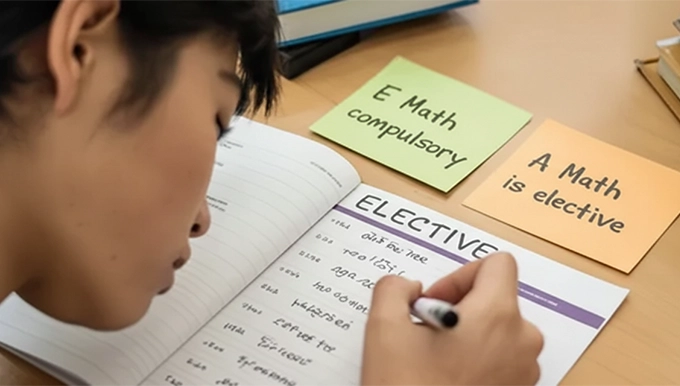
Choosing between only E-Math or adding A-Math is an important decision when progressing to upper secondary school in Singapore. Whether you are a parent guiding your child or a student planning ahead, it helps to grasp how these two subjects differ, what each one teaches, and which option might be a better fit. This blog explains everything clearly about these subjects.
Understanding E-Math and A-Math
In Singapore, when students begin Secondary 3 Math, they must decide whether to continue only with E-Math or to add A-Math to their syllabus. These two subjects shape your mathematical skills in different ways. Let’s explore how they compare.
What Is E-Math?
E-Math, short for Elementary Mathematics, builds your base using numbers, shapes, and logic. This subject trains you to work with real-world problems, like measuring, comparing values, and reading data. You also learn to solve questions using clear steps.
E-Math strengthens the way you understand numbers, space, and practical thinking. Many students who take Secondary 3 Math have already taken E-Math in previous levels, so the learning continues smoothly.
What Is A-Math?
A-Math, which stands for Additional Mathematics, explores concepts that challenge and expand your thinking. It involves working with algebra, symbols, and formulas that grow increasingly complex as you progress.
In A-Math, you cover various topics like trigonometry, logarithms, and calculus. These skills help you solve problems in science and engineering. A-Math tuition supports you if you want to take the A-level Maths syllabus in school.
When students reach Secondary 4 Math, A-Math becomes even more important for preparing for exams and future studies.
E-Math vs A-Math Singapore: The Core Differences
Here is a comparison of E-Math vs A-Math in Singapore broken down into key areas.
1. Level of Difficulty
E-Math teaches step-by-step ideas and helps students become confident through regular practice. It follows a steady path.
A-Math presents bigger problems that need deeper thinking. Still, many students succeed when they practise often and ask questions when needed.
2. Purpose and Use
E-Math shows you how to solve daily problems, like handling prices, comparing distances, or drawing graphs.
A-Math sharpens your brain for science-related topics. It prepares you to deal with technical questions and supports learning in physics and more.
3. Syllabus Coverage
E-Math begins early and develop throughout all four years of secondary school. It builds on what you have learnt during Primary School and becomes more detailed over time.
A-Math starts at the Secondary 3 level and carries through to Secondary 4 Math. The ideas it covers are fresh and new, which makes it exciting but more challenging.
How to Choose Between E-Math and A-Math
Making the best choice between E-Math vs A-Math in Singapore depends on how you think, what you enjoy, and what you plan to do later in school.
Your Interest
If you enjoy solving problems with steps and numbers, A-Math might match your thinking. If you only want to use math for simple, everyday tasks, then E-Math could suit you better.
Your Learning Style
Some students like solving puzzles and working with patterns. Others prefer working with straightforward, real-life tasks. Think about what style fits you before you decide.
Your Goals for School
If you plan to enter a junior college or study engineering or science, A-Math will help you greatly. It aligns closely with the A-level Maths syllabus and makes learning easier when you get there. If your path doesn’t require that depth, E-Math alone may be enough.
Why Both Are Important
Many students take both E-Math and A-Math because they build different strengths. E-Math supports everyday thinking, while A-Math stretches your problem-solving ability. Together, they offer a balanced learning journey.
Support from Tuition Centres
If you want extra help, enrolling in Secondary Math tuition may give you the boost you need. Tutors explain lessons clearly and offer regular practice. Students improve when they work closely with someone who understands their needs.
Skilled centres offer both E Math tuition and A Math tuition, giving you tools and worksheets to practise. These sessions also help you get ready for exams, especially for Secondary 4 level math.
Learning at Your Pace
Each student learns at a different speed. You may need more time with one topic or move quickly through another. If you started with PSLE Math tuition, you already know how steady support can make a big difference. Learning should match your pace and help you improve.
What Does the Syllabus Include?
Here is a basic outline of what you’ll cover in each subject.
E-Math Topics
- Whole numbers and operations
- Fractions, ratios, and percentages
- Geometry and measurements
- Algebra basics
- Data handling and graphs
- Word problems
A-Math Topics
- Linear and quadratic equations
- Indices, surds, and logarithms
- Trigonometric formulas
- Calculus: differentiation and integration
- Polynomials and graphs
- Algebraic identities and inequalities
E-Math builds solid everyday math skills. A-Math develops advanced thinking and sharpens how you handle detailed problems.
Why the Right Choice Matters
Choosing the right centre isn’t just about getting high marks. It’s about helping your child feel better about learning. A calm, clear, reliable tutor builds skills and allows the student to keep moving forward confidently. So, take your time, ask questions, and visit different centres. Once you find the one that fits, stay consistent and regularly contact the tutor.
If you’re looking for O Level Math Tuition, pick a centre that adjusts its pace to your child’s needs and provides enough practice.
Preparing for the A-Level Math Syllabus
A-Math tuition opens the door for students planning to tackle the A-level Math syllabus in the future. With topics like calculus and algebra, A-Math tuition sets the ground early. Students who study A-Math in Secondary 3 level Math and Secondary 4 Math find it easier to keep up with more advanced lessons later.
Conclusion
E-Math and A-Math both play important roles in a student’s academic path. The best subject depends on what you’re aiming for and how you like to learn. Some take both for a strong grasp of all areas. Others choose one based on their direction.
With support from Secondary Math tuition, students feel more confident and better prepared. Learning with care, practice, and the right guide can make all the difference.
Frequently Asked Questions
1. Can I choose A-Math without taking E-Math?
No. E-Math is required. You must take E-Math if you wish to take A-Math.
2. Is A-Math more difficult than E-Math?
A-Math explores more challenging topics, but with practice and help, students can manage it well.
3. Is E-Math more useful in daily life?
Yes. E-Math helps you use Math in everyday tasks, such as shopping, measuring, and making decisions.
4. Should I take both subjects?
Taking both gives you a strong advantage, especially if you want to keep many options open down the road.
5. How does tuition help with E-Math or A-Math?
E-Math tuition and A-Math tuition give students guided learning, worksheets, and personal help to boost their results.
No. E-Math is required. You must take E-Math if you wish to take A-Math.
A-Math explores more challenging topics, but with practice and help, students can manage it well.
Yes. E-Math helps you use Math in everyday tasks, such as shopping, measuring, and making decisions.
Taking both gives you a strong advantage, especially if you want to keep many options open down the road.
E-Math tuition and A-Math tuition give students guided learning, worksheets, and personal help to boost their results.

How to Choose the Right Tuition Provider in Singapore: Key Strategies
Finding the right support for your child’s studies is important. With numerous tuition centres situated everywhere, knowing what to look for is essential. This guide will help you identify the best tuition provider in Singapore using simple steps. Whether your child is preparing for PSLE, O-Levels, or JC exams, the right support can shape a better learning path.
Understand What Your Child Needs
Before you begin your search, think about what your child finds difficult. Does your child need extra help in science, or does math seem confusing to them? Maybe your child needs someone to explain things more clearly.
Knowing your child’s struggles will guide you to choose a centre that fits their learning style. Some children learn better with pictures, others with practice. Make sure the tuition provider listens and adjusts to your child’s needs.
Check Tutor Experience and Skill
Teachers at a centre should know the subjects very well. They must explain complex ideas in a way that makes it easy to grasp. Look for tutors who have taught and understand the local exam formats for many years.
Also, good tutors spark interest in learning. They ask questions, solve doubts quickly, and encourage students to think critically. The best tuition centre in Singapore has tutors who give time and attention to each student in class.
Ask About Class Size
Some tuition centres pack too many students into a room. This makes it hard for a tutor to notice who needs help. You should choose centres that limit their class size to allow more care.
With a smaller group—about 6 to 9 students—teachers can observe, respond, and adjust their teaching for each student. This setup lets your child ask questions without worries and get support.
Look at the Learning Methods
Good tuition classes in Singapore don’t just repeat school lessons. They uncover weak spots and target misconceptions.
Using the “Plug-the-Gaps” method helps tutors spot learning cracks and repair them fast before the student moves on. When tutors fix what’s wrong early, your child can learn more quickly and easily.
Study Materials Matter
Well-made books and notes help students prepare well. Look for a centre that designs helpful worksheets, adds clear explanations, and offers complete revision tools.
Some centres even compile their questions from many schools. These questions help students learn to solve problems in different ways. Updated materials are essential, especially if you’re looking for maths and science tuition near you.
See If the Centre Offers Subject Choices
It helps when a tuition centre teaches more than one subject. If your child needs math and science help, don’t waste time running between two centres.
Find a centre that offers:
- Primary: Maths and Science
- Secondary: Maths and Science
- Junior College/IP: Chemistry, Physics, and Maths
This way, your child can stay with one centre across the years while learning in a familiar space.
Check How They Track Progress
Improvement is shown in small steps. Good centres often give short tests and check how students perform regularly. Tutors must also share updates to reassure parents.
Ask how they measure results. Do they track test marks? Do they watch how a student handles new questions? Tracking progress helps the tutor adjust lessons and helps parents understand if the teaching works.
Observe the Learning Environment
The right learning space must feel calm, clean, and focused. A well-organised place allows students to concentrate and grasp ideas better.
Even in online lessons, tutors must maintain focus and make every student feel heard. A helpful, stable setting allows children to ask questions and explore without fear.
Review Student Success Rates
Many centres share how their students perform in exams. These numbers don’t tell the whole story, but give you clues about teaching quality.
Ask how many students passed PSLE, O, or A Level exams. Ask which schools their students attend. If a centre regularly supports students from top schools, you know they provide solid teaching.
Ask for a Trial Lesson
You shouldn’t commit without trying. Ask the centre if they offer trial tuition classes in Singapore. Your child can then get a feel of the teaching, and you can watch how the tutor works. After the trial, talk with the tutor. Ask what your child found hard and how they will support learning from there.
For example, if you are looking for a PSLE science tutor, ensure the lesson includes proper teaching, not just a walk-through or short chat.
Why the Right Choice Matters
Choosing the right centre isn’t just about getting high marks. It’s about helping your child feel better about learning. A calm, clear, reliable tutor builds skills and allows the student to keep moving forward confidently. So, take your time, ask questions, and visit different centres. Once you find the one that fits, stay consistent and regularly contact the tutor.
If you’re looking for O Level Math Tuition, pick a centre that adjusts its pace to your child’s needs and provides enough practice.
Conclusion
Choosing the right tuition provider in Singapore shapes your child’s learning journey. A well-chosen centre offers clear teaching, small class sizes, strong materials, and supportive tutors who adjust to your child’s pace. By focusing on teaching methods, subject choices, and progress tracking, you can ensure your child receives steady guidance and gains the confidence to manage schoolwork. Whether you seek primary support or O Level Math Tuition, the best tuition centre in Singapore will prioritise your child’s growth. Always take time to ask questions, try a class, and observe how your child responds to ensure the centre fits their needs.
Frequently Asked Questions
1. What is the best way to find a good tuition provider in Singapore?
Start by checking the subjects your child needs help with, then look for centres with experienced tutors, small class sizes, and updated materials.
2. How many students are usually in a good tuition class?
The best class sizes have 6 to 9 students, so tutors can pay attention to each learner.
3. Should I pick a centre that offers more than one subject?
Yes. Finding a place that provides maths, science, and other subjects in one location is easier and more effective.
4. How do I know if the tuition is helping my child?
You can ask the tutor for feedback, check if your child understands lessons better, and watch for improvements in schoolwork.
5. Can I try the classes before I register?
Most centres offer free or paid trial classes so your child can experience the teaching style before signing up.
Start by checking the subjects your child needs help with, then look for centres with experienced tutors, small class sizes, and updated materials.
The best class sizes have 6 to 9 students, so tutors can pay attention to each learner.
Yes. Finding a place that provides maths, science, and other subjects in one location is easier and more effective.
You can ask the tutor for feedback, check if your child understands lessons better, and watch for improvements in schoolwork.
Most centres offer free or paid trial classes so your child can experience the teaching style before signing up.


