Learning Voyage – Math and Science Specialist



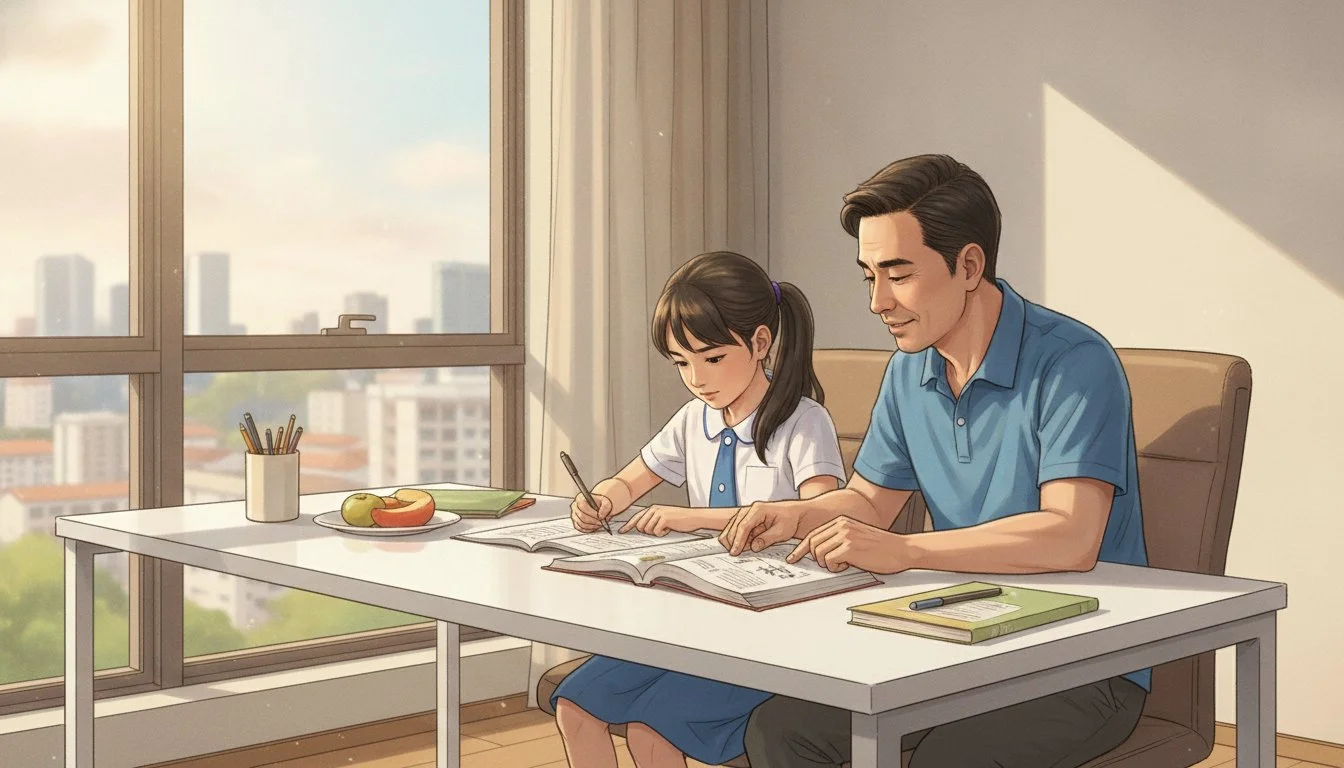
By Andy Woo July 12, 2026
How to Support Your Child During the PSLE Year: A Strategic Guide for Singapore Parents
What if the most effective way to secure a top Achievement Level isn’t by acting as a stern captain, but as a steady navigator through the inevitable fog of exam stress? Every Singaporean parent understands the weight of the 2026 season, where the pressure of complex math heuristics and precise science keywords can turn a peaceful home into a high-tension zone. You aren’t alone in feeling that pang of guilt when revision leads to friction, or the quiet fear that your child might be falling behind their peers. Learning how to support your child during psle year requires a sophisticated blend of academic authority and nurturing mentorship.
This guide provides the navigational tools you need to balance academic excellence with your child’s emotional well-being. We’ll explore how to identify specific learning hurdles using a methodical “Plug-the-Gaps” approach, ensuring your child is ready for the oral examinations in August and the written papers in September. You’ll gain practical strategies to foster a calm home atmosphere while building the higher-order thinking skills required for secondary school success. Let’s transform this challenging voyage into a path of discovery and personal achievement for your child.
Key Takeaways
- Adopt a “safe harbour” mindset that prioritizes emotional resilience and consistent effort over raw grades to build lasting student confidence.
- Discover how to support your child during psle year by implementing a balanced daily routine that integrates focused deep work with essential periods of recovery.
- Move beyond “brute force” revision by using targeted techniques to identify and resolve specific academic hurdles, effectively reducing student anxiety and overwhelm.
- Leverage professional mentorship and small-group coaching to act as an external navigator, helping to maintain a harmonious home environment while sharpening higher-order thinking.
- Reframe the national examination as a significant milestone for personal character development and a continuous path of discovery rather than just a high-stakes placement test.
The PSLE Year: Navigating the Stormy Waters of National Exams
The final year of primary school is often viewed as the first major tempest in a young student’s life. It isn’t merely a placement test; it’s a transformative journey that tests character as much as academic prowess. In Singapore, the “hidden pressure” within our education system is a palpable force. Even when we offer encouraging words like “just do your best,” the weight of the Achievement Level (AL) system and the desire for a specific secondary school can create a heavy atmosphere at home. Learning how to support your child during psle year requires you to drop the role of the commanding officer. Instead, you must become a skilled navigator, guiding them through the waves of frustration and fear of failure that often arise when they compare their progress to their peers.
Understanding the 2026 PSLE Timeline
The voyage toward the Primary School Leaving Examination (PSLE) follows a specific, rigorous path. The early months are dedicated to foundation building, ensuring no conceptual gaps remain from earlier years. By mid-year, the current picks up as students enter intensive revision phases. Key markers for the 2026 season are already set. Oral examinations take place on 12 and 13 August, followed by Listening Comprehension on 15 September, and the Written papers from 24 to 30 September. It’s vital to remember that the PSLE is a marathon of endurance, not a short burst of speed; pacing is everything to avoid burnout before the final sprint in October.
Recognising Signs of Exam Stress in Your Child
As the academic pressure mounts, keep a weather eye on your child’s well-being. Burnout doesn’t always look like tears or dramatic outbursts. It often manifests as subtle physical or behavioural changes, such as sudden irritability, disrupted sleep patterns, or a loss of appetite. You need to differentiate between a “healthy challenge,” which motivates growth, and “excessive pressure,” which causes a child to capsize emotionally. Your most important job is to ensure the home remains a “safe harbour.” This means maintaining a calm environment where your child feels their worth isn’t tied to a practice paper score. If you notice persistent signs of distress, it might be time to seek expert guidance. Specialized Primary 6 Mathematics Tuition or science support can help offload academic tension by providing a structured, expert-led environment, allowing you to focus on being the emotional anchor your child needs.
Building a Safe Harbour: Emotional Resilience and Well-being
If the PSLE year is a turbulent sea, your home must serve as the lighthouse that guides your child back to safety. It’s easy to let the dinner table conversation become a series of interrogations about practice paper scores, but this often fuels a high-tension environment. Shifting the focus from final Achievement Levels to the quality of daily effort is the first step in learning how to support your child during psle year without crushing their spirit. When you prioritize character and persistence, you build a foundation of confidence that lasts far beyond the 2026 exam season. This transformation starts with active listening. Instead of offering immediate solutions to their academic frustrations, try to understand the underlying fear. Many families find success by looking at practical tips from parents who have navigated these waters, emphasizing that the parent’s primary role is to be a steady emotional anchor.
Parents must also be mindful of “emotional leakage.” Children are highly intuitive; they can sense your anxiety even if you don’t speak it. If you’re constantly checking the parent portals or comparing notes with other parents in WhatsApp groups, that stress will inevitably flow to your child. Make time for non-academic bonding. Go for a walk at East Coast Park or watch a movie together without mentioning school. These moments remind your child that they are loved for who they are, not just for the grades they produce. At Learning Voyage, we believe that academic results are a byproduct of a confident mind; our mentorship philosophy focuses on building that inner strength alongside technical skills.
The Language of Encouragement
The way we speak to our children during revision can either build a bridge or a wall. Replace performance-based questions with process-based inquiries. Instead of asking “Did you get full marks for that Math paper?”, try asking “What was the most interesting heuristic problem you solved today?” This encourages them to view learning as a continuous path of discovery. Use specific praise for their persistence. When they finally grasp a complex Science concept after multiple attempts, acknowledge the “grit” they showed. If they encounter a “failed” practice paper, treat it as a valuable diagnostic tool rather than a disaster. It’s simply a map showing where the next conceptual gap needs to be plugged.
Protecting Mental Health During Peak Revision
As the schedule tightens, “white space” becomes a non-negotiable necessity. A child’s brain needs periods of active recovery to process information effectively. Experts cited in The Straits Times have frequently highlighted that student well-being is the engine of academic success. Ensure your child gets enough sleep; it’s during deep rest that memory consolidation happens for those difficult Science keywords and Math formulas. A well-rested child is a resilient child, capable of facing the 2026 examinations with a clear head and a steady hand.
Navigational Excellence: Strategic Academic Support and “Plugging Gaps”
While emotional resilience provides the anchor, academic competence is the engine that drives a student forward through the 2026 examination season. Many parents mistakenly believe that “brute force” revision—simply doing more practice papers—is the key to success. However, this approach often leads to mental fatigue and a sense of drowning in work. Strategic revision, by contrast, is about efficiency and precision. When you understand how to support your child during psle year, you realize that academic mastery is one of the most effective ways to reduce anxiety. A child who feels equipped with the right tools is naturally more confident. While many resources on parental support during PSLE emphasize the psychological aspect, we must recognize that true calm comes from knowing exactly how to tackle a challenging paper. By identifying specific learning hurdles early, you lighten the heavy load on your child’s shoulders, transforming a daunting task into a manageable series of steps.
The “Plug-the-Gaps” Methodology for PSLE Success
At Learning Voyage, we utilize a proprietary Plug-the-Gaps technique designed to identify hidden conceptual weaknesses that standard classroom teaching might miss. Resolving even one small conceptual hurdle can unlock significant grade improvements, moving a student from an AL3 to an AL1. To implement this at home, follow a methodical process for analyzing past-year papers. Don’t just look at the final score; categorize every mistake. Is it a “careless” error, or a “conceptual” gap? Once you find recurring errors in specific topics like Fractions or Diversity, you can target those areas with precision. This prevents the frustration of repetitive, unproductive study and ensures every hour of revision contributes to their personal growth and achievement.
Mastering the Core Subjects: Math and Science
The academic landscape of the Primary 6 year is dominated by the twin peaks of Mathematics and Science. In our Primary 6 Mathematics Tuition sessions, we see students struggle most with complex word problems. It’s essential to view heuristics not as rigid formulas to memorize, but as flexible tools for navigation. Similarly, Science requires a sophisticated understanding of “OEQ” (Open-Ended Question) answering techniques. It isn’t enough to understand the concept; the student must use precise Science keywords to secure full marks. Mastering these specific requirements early in the year prevents the “sinking feeling” that occurs when a child understands the material but cannot express it in the way the examiners require. This methodical preparation ensures they enter the exam hall not with fear, but with the steady hand of a seasoned veteran.

Charting the Daily Course: Routine, Rest, and Revision
A vessel’s performance in stormy seas depends entirely on the daily maintenance it receives while in port. Similarly, how to support your child during psle year isn’t just about the final exam month; it’s about the steady, rhythmic habits established early in the season. A balanced daily routine acts as a protective hull, shielding your child from the chaotic waves of last-minute cramming. We advocate for a structure that balances “deep work”—uninterrupted, high-concentration study—with active recovery. For the typical Primary 6 attention span, interval-based techniques like the Pomodoro method are highly effective. This involves 25 minutes of intense focus followed by a 5-minute break, which prevents mental fatigue and keeps the mind sharp. Keep the “vessel” in peak condition through nutritious meals and at least 30 minutes of physical activity daily; a body in motion helps process the stress that a sedentary revision schedule can accumulate.
Your child’s environment is their cockpit. A dedicated, distraction-free study space is essential to signal to the brain that it’s time for serious navigation. This area should be well-lit, organized, and free from the siren call of mobile devices. By treating the study environment with professional respect, you help your child transition into a mindset of academic authority and personal growth. It’s about creating a space where they feel empowered to take ownership of their learning journey.
Effective Revision Scheduling
Success requires a clear revision map that covers the full syllabus well before the September written papers. Instead of a vague “study science” goal, break the curriculum into specific topics. For instance, our Primary 6 Science Tuition students benefit from a mix of practical observation and rigorous keyword drills. You can replicate this at home by encouraging your child to explain Science concepts through everyday examples. To ensure formulas and keywords stay top-of-mind, utilize our Post-it Note methodology. Placing small reminders on the bathroom mirror or study desk allows for quick, effortless recall throughout the day, turning every corner of your home into a continuous path of discovery.
Managing the Digital Distraction
Digital devices can either be a powerful sextant or a dangerous reef. Setting healthy boundaries for screen time is a non-essential part of exam year management. While technology offers excellent tools for learning, it shouldn’t be a source of social comparison or late-night stress. Encourage “analog” breaks where your child can engage in reading, drawing, or outdoor play. These activities provide the “white space” necessary for the brain to decompress and reset. If you’re finding it difficult to establish these routines alone, view our latest class schedules to see how our structured environment can provide the external discipline your child needs to stay on course.
Sailing Toward Success: Why Professional Mentorship Matters
Sometimes the most profound act of support a parent can offer is to invite an expert navigator onto the vessel. When the pressure of the 2026 examination season begins to strain the parent-child relationship, a specialist tutor serves as a vital external partner. By offloading the academic heavy lifting to a dedicated mentor, you can return to your primary role as a source of unconditional emotional support. This shift is often the missing piece in how to support your child during psle year effectively. It transforms the home from a high-stakes classroom back into a safe harbour, where your child feels understood rather than interrogated. Professional mentorship provides the methodical hand needed to navigate high-pressure environments, turning academic hurdles into milestones of personal growth and achievement.
Our small-group coaching model is specifically designed to build peer confidence. When a student sees their crewmates tackling the same complex heuristics or science open-ended questions, the task feels less isolating. This shared journey fosters a sense of collective resilience and healthy enthusiasm. We have witnessed countless transformations where a struggling student, once capsized by the fear of “falling behind,” evolves into a prepared and confident individual ready to face the national exams with a steady hand. This evolution is not just about the final Achievement Level; it is about the character built through persistent, guided effort.
The Learning Voyage Difference
At the heart of our mission is Principal Tutor Andy Woo, whose vision for holistic Math and Science education transcends simple rote learning. Our proprietary methods are rooted in building higher-order thinking skills that empower students to solve problems they have never seen before. We invite parents to join a community that values both academic results and the development of a resilient spirit. By focusing on bespoke quality and personal attention, we ensure that every student, regardless of their starting point, receives the high-quality support they deserve to succeed at their own pace.
Preparing for the Next Phase: Beyond PSLE
It is essential to remember that the PSLE is merely one port of call in a much longer voyage of discovery. The foundational skills mastered during this year, particularly in Mathematics, provide the essential ballast for the transition to secondary school and the eventual challenges of Secondary 4 E-Mathematics. We encourage a long-term view of education as a continuous path of discovery rather than a series of disconnected hurdles. By securing the right mentorship now, you are setting the course for a lifetime of academic authority and personal achievement. Contact us today to secure your child’s spot for the 2026 season and let us navigate this transformative year together.
Secure the Horizon: Your Partnership for PSLE Success
Navigating the 2026 national examinations is a voyage that requires more than just academic endurance; it demands a holistic strategy that balances rigorous preparation with emotional stability. By shifting from a commander to a navigator, you create a safe harbour where your child can thrive. Implementing a rhythmic daily routine and identifying conceptual hurdles early ensures the path to top Achievement Levels remains a journey of growth rather than a source of burnout. Mastering how to support your child during psle year is ultimately about knowing when to lead and when to lean on expert guidance to keep the vessel on course.
Our specialist small group coaching and proprietary “Plug-the-Gaps” technique have a proven track record in Math and Science excellence, helping students transform academic hurdles into personal victories. Navigate the PSLE journey with confidence; Book a Diagnostic Session at Learning Voyage. Every student deserves a steady hand and a clear map to reach their full potential. Let’s ensure your child sails toward their secondary school goals with a calm mind and a confident heart.
Frequently Asked Questions
How much time should my child spend on PSLE revision each day?
Quality exceeds quantity when deciding how to support your child during psle year with a sustainable schedule. On school days, ninety minutes to two hours of focused, “deep work” revision is usually sufficient to maintain momentum without causing burnout. On weekends, you might extend this to four hours, but ensure these sessions are broken into smaller intervals. This rhythmic approach keeps the mind sharp and prevents the mental fatigue that often leads to careless errors in practice papers.
My child is struggling with Math heuristics; is it too late to start tuition?
It’s never too late to begin specialist coaching, provided the focus is on identifying specific conceptual hurdles rather than generic practice. Even in the months leading up to the 2026 exams, targeted Primary 6 Mathematics Tuition can help “plug the gaps” in a student’s understanding of complex word problems. Resolving a few key misunderstandings in heuristics can unlock significant confidence, allowing a student to navigate the paper with a much steadier hand.
How can I stop comparing my child’s PSLE results with their cousins or friends?
Focus on your child’s unique voyage and their personal growth milestones rather than the destination of others. Every student has a different academic draft and sailing speed; comparing them only creates unnecessary emotional drag that slows their own progress. Celebrate their incremental improvements, such as mastering a difficult Science concept or improving their time management in Math. This shift in perspective fosters a much healthier home environment and builds lasting student confidence.
What should I do if my child completely shuts down when we talk about exams?
If your child capsizes emotionally when exams are mentioned, it’s time to steer the conversation toward a safe harbour. Stop discussing Achievement Levels for a week and focus entirely on non-academic bonding to remind them that they are more than a grade. When you do return to the topic, use process-based questions about what they found interesting rather than performance-based questions about scores. This reduces the “hidden pressure” and helps them view learning as a continuous path of discovery.
Is it better to focus on my child’s weakest subjects or polish their strongest ones?
Prioritize resolving conceptual gaps in the weakest subjects because these areas typically offer the greatest opportunity for Achievement Level (AL) improvements. Under the AL scoring system, moving from an AL6 to an AL4 in a weak subject often requires less effort than moving from an AL2 to an AL1 in a strong one. However, don’t neglect their strengths entirely; occasional practice in their favourite subjects provides the “small wins” necessary to maintain their enthusiasm and morale.
How do I explain the new PSLE AL scoring system to my child without adding pressure?
Explain the Achievement Level system as a way to measure their own mastery of a subject rather than a competition against their peers. Emphasize that the AL bands are wider than the old T-score system, which means they don’t need to fret over every single mark to achieve a good grade. This perspective helps them focus on their own performance and personal achievement, turning the national examination into a manageable milestone on their educational journey.
Should we cancel all extracurricular activities during the PSLE year?
Total cancellation of extracurricular activities is often counterproductive as it removes the “white space” your child needs for active recovery. Retaining at least one physical or creative outlet provides an essential vent for exam stress and keeps the “vessel” in peak condition. While you might reduce the frequency of commitments during the final sprint in September, maintaining some hobbies ensures your child remains a well-rounded, resilient individual who is ready for the challenges of secondary school.
How can I help my child master Science keywords for open-ended questions?
Mastering Science keywords requires moving beyond rote memorization to a deep understanding of application, which is a core part of how to support your child during psle year effectively. Use systematic drills where they must explain a concept, such as “conduction” or “photosynthesis,” using the specific terminology examiners require. Specialized Primary 6 Science Tuition can provide the expert-led environment needed to sharpen these precise answering techniques, ensuring they don’t lose marks on “Open-Ended Questions” despite understanding the material.


