Learning Voyage – Math and Science Specialist



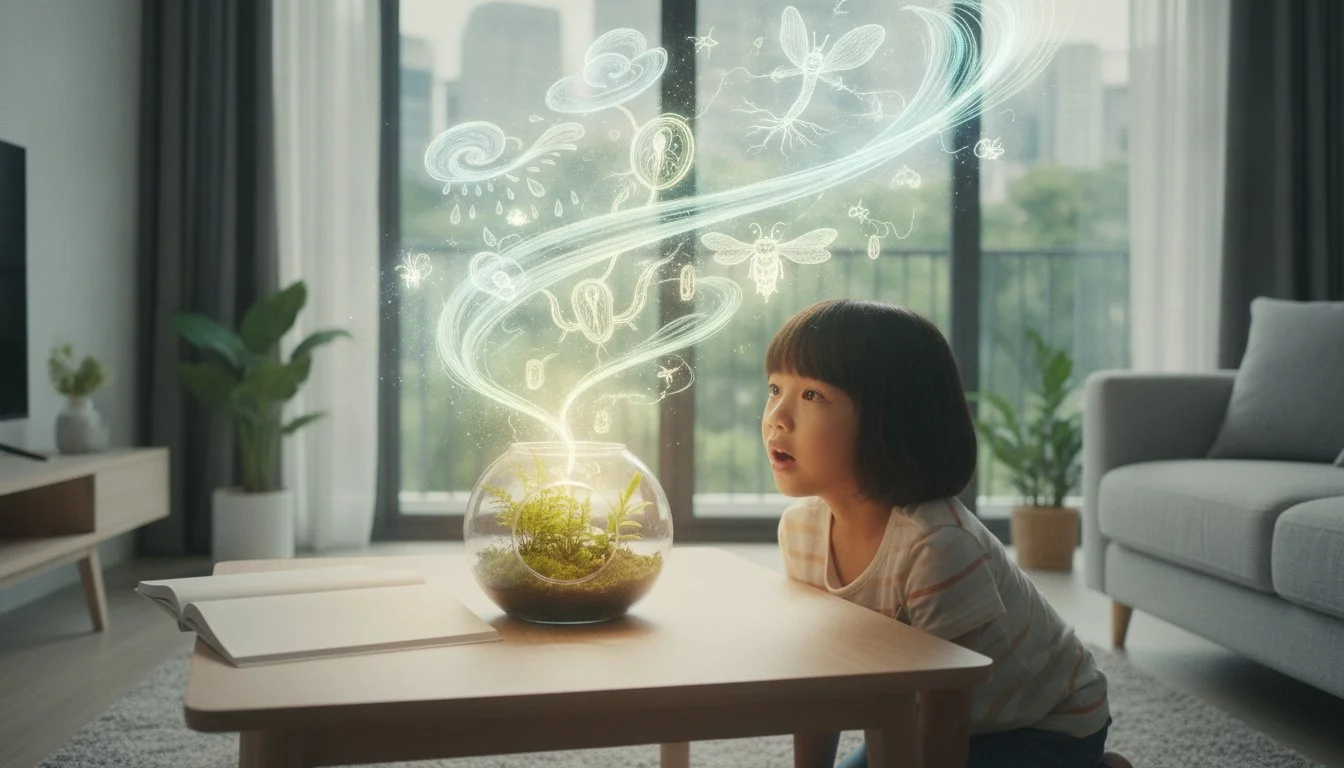
By Andy Woo September 15, 2026
My Child Has No Interest in Science: A Parent’s Guide to Rekindling Curiosity
Did you know that while Singaporean students rank second globally in science, only two in ten Primary 4 and Secondary 2 students report feeling “very confident” in the subject? It’s a startling disconnect that many local parents witness firsthand at the kitchen table. You might find yourself sighing as your child pushes away their textbook, convinced that my child has no interest in science and fearing they’ll be left adrift when the PSLE or O-Level examinations arrive. This frustration is common, especially when the rigid nature of the MOE marking scheme makes scientific inquiry feel more like a memory test than a fascinating exploration of our world.
We believe that every student possesses an innate curiosity that simply needs the right compass to guide it. In this guide, you’ll discover how to transform academic apathy into a vibrant passion for discovery through practical home strategies and specialized pedagogical support. We will show you how to bridge the gap between a lack of engagement and the mastery of complex open-ended questions. By identifying specific learning hurdles and using targeted techniques to plug the gaps in their understanding, we can help your child navigate their educational journey with newfound confidence and achieve the results they deserve.
Key Takeaways
- Understand how the “Keyword Trap” in the MOE marking scheme often discourages students, making them feel their correct ideas are wrong due to specific phrasing requirements.
- Implement practical “Kitchen Chemistry” and visit local sites like NEWater to transform abstract syllabus topics into relatable, real-world experiences.
- Address the root causes when you feel my child has no interest in science, moving beyond rote memorization to foster a genuine spirit of inquiry.
- Learn to balance natural curiosity with rigorous exam performance, treating them as two essential sails that help your child navigate toward academic excellence.
- Recognize the signs of “concept confusion” and high anxiety that suggest it’s time for professional mentorship to plug the gaps in your child’s learning journey.
Understanding Why Science Interest Fades in the Singapore Education System
It starts with a box of curious questions about why the sky is blue or how ants find their way home, but for many Singaporean students, that wonder eventually hits a wall of assessment criteria. When a parent realizes my child has no interest in science, it’s rarely because the child lacks innate curiosity. Instead, it’s often a case of “Science Disengagement,” a specific mismatch where the joy of discovery is stifled by the weight of academic pressure. We see students who were once eager explorers now feeling like a ship caught in the doldrums of rote memorization, unable to find the wind to move forward. This shift is heartbreaking for parents who want their children to see the world as a place of endless possibility.
One major culprit is the “Keyword Trap.” Imagine a student explaining a concept perfectly in their own words, only to see a sea of red ink because they didn’t use the specific vocabulary required by the MOE marking scheme. This constant correction of “correct” ideas can be deeply demoralizing. It’s natural for children to lean toward story-based subjects where their voice feels heard, rather than fact-based science that feels like a rigid set of rules. Understanding the evolution of science education helps us see that while standards are necessary, they shouldn’t come at the cost of a student’s confidence.
The Pressure of the PSLE and O-Level Marking Schemes
The SEAB and MOE standards are world-class, but they demand a level of precision that can be daunting for a ten or twelve-year-old. The CER (Claim, Evidence, Reasoning) framework, while a logical tool for scientists, often feels like a straitjacket to creative thinkers. A report in The Straits Times recently highlighted how the new “Science for Life” curriculum aims to reduce rote learning, yet the reality of national exams remains a significant source of “Science anxiety.” When every answer must fit a specific mold, the spirit of inquiry often takes a backseat to the fear of being wrong, leading parents to worry that my child has no interest in science when they are simply afraid of the marking rubric.
The “Gap” Phenomenon: How Small Hurdles Become Large Barriers
Science is a cumulative journey where each year builds upon the last. If a student misses a foundational concept in Primary 3 or 4, such as the properties of matter or basic life cycles, the more complex topics in Primary 5 and 6 become insurmountable peaks. These small hurdles quickly evolve into large barriers that block progress and tank motivation. At Learning Voyage, our dedicated expertise centers on a “Plug-the-Gaps” philosophy. We believe that by identifying and addressing these specific conceptual voids, we can help a student regain their footing. It’s about ensuring the hull of their academic ship is sound before they attempt to navigate the rougher waters of secondary school and beyond.
5 Practical Steps to Spark Science Curiosity at Home
When you feel that my child has no interest in science, it’s often because the subject has become synonymous with assessment books and rigid marking schemes. To reignite that flickering flame of curiosity, we must move beyond the classroom walls and anchor science in the real world. By transforming daily routines into moments of discovery, you can help your child see that science isn’t just a school subject; it’s the very fabric of our lives. This shift in perspective is the first step toward building the academic confidence they need to navigate their upcoming examinations.
Turning Your Kitchen Into a Laboratory
The kitchen is perhaps the most accessible science lab in any Singaporean home. When you’re baking a cake, don’t just follow the recipe; discuss the chemical changes occurring as the batter rises in the heat. If you’re growing a small herb garden on your service yard, track the biological processes of germination and photosynthesis. You can ask probing questions like, “Why do you think the leaves are turning toward the sun?” without making it feel like a mock test. Inquiry-based learning is a pedagogical approach that prioritizes student questions and active exploration over the passive absorption of facts. This method mirrors the “Inquire like Scientists” pillar of the updated MOE syllabus, making home life a natural extension of their primary science tuition journey.
Leveraging National Landmarks for Scientific Discovery
Singapore is a living textbook of scientific and engineering marvels. A trip to Jewel Changi isn’t just for shopping; it’s an opportunity to discuss the physics of the Rain Vortex or the engineering required to support such a massive glass dome. Similarly, the biodiversity at Gardens by the Bay or the sustainability efforts at NEWater plants provide concrete examples of concepts that often feel abstract on paper. Encourage your child to use a science journal or a simple app to record their observations. This practice helps them bridge the gap between textbook theory and real-world application, which is vital for answering those challenging application-based questions in the PSLE and O-Levels.
- Encourage ‘Why’ Questions: Allow your child to ask questions without immediately jumping to the “exam-correct” answer. Let them hypothesize first to build their reasoning muscles.
- Leverage Visual Media: Watch high-quality documentaries or visit the latest exhibits at the Science Centre Singapore to provide a visual context for complex topics.
- Shift the Focus: During home discussions, celebrate the process of discovery rather than just the final grade. This reduces anxiety and fosters a growth mindset.
If you’re looking to anchor these home-based discoveries with structured pedagogical support, our class schedules offer a clear roadmap for consistent academic progress and personal growth.
Bridging the Gap Between Interest and Exam Performance
Many parents feel a deep sense of bewilderment when their child enjoys nature documentaries or visits to the zoo but struggles significantly with a school Science paper. It is a common misconception that a natural curiosity about the world automatically translates into high marks. In reality, genuine interest and exam skills are two different sails on the same ship; you need both to catch the wind and navigate toward success. When you find yourself thinking that my child has no interest in science, you might actually be observing a child who has become discouraged by the technicalities of the examination rather than the subject itself. They may love the “what” of science but feel defeated by the “how” of the assessment.
The most frequent objection we hear from parents is, “My child likes science but still fails the papers.” This disconnect usually occurs because the Singapore education system, governed by rigorous SEAB standards, requires an exceptional level of precision. A student might conceptually understand how a plant survives, but if they fail to use specific keywords like “stomata” or “photosynthesis” in the correct context, they lose marks. This is where the bridge between curiosity and distinction must be built. We must move beyond general interest and focus on the mechanics of application, ensuring that the child’s natural enthusiasm isn’t dampened by a sea of red ink.
Mastering the Art of Open-Ended Questions (OEQ)
Open-ended questions are often the stormy seas where most Science students lose their way. These questions demand more than just rote memorization; they require a student to analyze a scenario, identify the relevant scientific principle, and articulate a logical conclusion. Many students capsize here because they cannot bridge the gap between what they see and what the examiner wants to hear. At Learning Voyage, we coach students to navigate these treacherous waters using our proprietary plug-the-gaps technique. By identifying exactly where a student’s logic breaks down, we can provide the specific linguistic and conceptual tools they need to answer with confidence and precision.
The Role of Confidence in Academic Transformation
Confidence acts as the anchor that keeps a student steady during the high-pressure environment of the PSLE or O-Levels. When a student begins to understand the internal logic of the marking scheme, they experience small, significant wins. These wins create a virtuous cycle where improved understanding leads to better results, which in turn fuels a genuine interest in the subject. A nurturing mentor serves as a vital navigator in this process, providing the empathetic guidance needed to turn academic struggle into personal growth. We’ve witnessed many students move from a failing grade to an “A” simply by finding their academic anchor and realizing they have the skills to master even the most challenging papers.

Identifying When Your Child Needs Professional Science Mentorship
Recognizing when a student’s academic ship is taking on water is the first step toward a successful rescue. For many parents, the realization that my child has no interest in science isn’t a sudden event, but a gradual awareness built from specific warning signs. The first indicator is often consistent failure to finish examination papers. This rarely happens because the child is “slow”; rather, it stems from “concept confusion.” When foundational knowledge is shaky, a student spends too much time deciphering a single question, leading to a frantic and incomplete finish. This persistent struggle frequently manifests as high anxiety or emotional outbursts the moment Science homework is mentioned, turning the study table into a site of conflict.
The “Plateau” is another critical signal. This occurs when a child’s grades remain stagnant despite hours of intensive self-study or parental coaching. It suggests that the student has reached the limit of what they can achieve without a specialized navigator to guide them. Most tellingly, you might notice your child losing their “spark.” When a child stops asking questions about the natural world, it signals that Science has become a source of stress rather than a voyage of wonder. At this stage, professional intervention is no longer just a functional necessity; it’s a transformative step toward reclaiming their confidence.
Why Small Group Coaching Beats 1-on-1 Home Tuition
While some parents initially consider one-on-one home tuition, this isolated environment can unintentionally heighten a student’s sense of failure. In contrast, small group coaching utilizes the “Peer Effect” to build resilience. Seeing others navigate similar hurdles and eventually succeed helps a child realize they aren’t alone in their struggles. Professional coaching provides a “maritime fleet” of support, where interactive discussions and shared problem-solving create a more dynamic and encouraging atmosphere. This collaborative environment is far more effective for personal growth than the solitary nature of home-based instruction, which lacks the healthy social cues of a dedicated learning centre.
The Transition to Secondary and JC Science
The lack of interest often compounds rapidly as students move from Primary Science to the specialized rigour of Pure Physics or Chemistry. Cumulative learning refers to an educational process where new knowledge is built upon a solid foundation of previously mastered concepts, making early intervention critical for O-Level success. Without a sturdy base, the increased complexity of secondary science tuition and ip-jc science tuition can feel like navigating a storm without a compass. Identifying these gaps early ensures that the transition to higher-level academic institutions remains a smooth and successful journey.
If you recognize these signs in your child, it’s time to chart a new course for their education. Contact our team today to learn how our “Plug-the-Gaps” technique can restore your child’s academic confidence and rekindle their natural curiosity.
Navigating Toward Excellence with Learning Voyage
At Learning Voyage Education Centre, we view education as more than just a functional necessity; it is a transformative process of personal growth and achievement. Our mission is to transform students into confident navigators of their own education, ensuring they possess the skills to sail through the most challenging academic waters. When a parent first approaches us saying that my child has no interest in science, we don’t see a lack of ability. Instead, we see a student whose curiosity has been hindered by specific learning hurdles that have yet to be addressed. Under the vision of Principal Tutor Andy Woo and our dedicated educator team, we provide the bespoke quality and empathetic guidance required to turn academic apathy into a voyage of discovery.
Our proprietary “Plug-the-Gaps” technique is specifically designed to target the root causes of disinterest. By identifying exactly where a student’s understanding has faltered, we can provide the precise support needed to restore their confidence. This methodical approach ensures that every student, regardless of their starting point, has the opportunity to succeed at their own pace. We invite you to explore our class schedules to find the right fit for your child’s current level and academic goals.
Our Specialized Math and Science Methodology
The 2026 exam landscape, with its emphasis on the “3 INs” framework, requires more than just memorization; it demands higher-order thinking and the ability to innovate using scientific principles. Our methodology moves beyond rote learning, focusing on inquiry-based skills that prepare students for the rigours of the updated PSLE and O-Level syllabi. We foster a post-it-notes culture of encouragement, where every small breakthrough is celebrated and inclusive support is the norm. This unique environment helps build the character and resilience necessary for long-term academic success.
Your Next Step on the Voyage
Every great explorer in history needed a reliable chart to find their way and a steady lighthouse to guide them through the dark. If you feel that my child has no interest in science, let us provide the navigation they need to find their spark again. We encourage you to reach out for a consultation so we can identify your child’s specific gaps and chart a bespoke path toward excellence. Together, we can ensure their educational journey is one of achievement and confidence. Your child deserves a partner who is both formidable in expertise and approachable in commitment. Please contact us today to begin this transformative journey.
Charting a Course for Scientific Success
Transforming a child’s academic journey requires more than just extra textbooks; it demands a shift in how they perceive discovery and assessment. We’ve explored how the rigid nature of the MOE marking scheme can stifle curiosity, and how practical home engagement can begin to reignite that spark. However, the true transformation happens when a student learns to bridge the gap between their natural interest and the technical requirements of the examination. If you’re feeling the weight of the realization that my child has no interest in science, know that this is simply a temporary stall in their educational voyage. With the right navigator, every student can find their way back to a path of confidence and achievement.
Our dedicated educators, led by Principal Andy Woo, utilize a specialist “Plug-the-Gaps” technique within a nurturing small group coaching environment. We provide the personalized attention and higher-order thinking skills necessary to meet the 2026 examination requirements. Secure your child’s spot on the voyage to Science excellence; contact Learning Voyage today. Your child’s potential is a vast ocean, and we’re here to help them sail it with skill and pride.
Frequently Asked Questions
Is it normal for a Primary 5 student to suddenly lose interest in Science?
It is quite common for interest to dip during Primary 5 because the curriculum becomes significantly more demanding. Students transition from basic observations to complex topics like electricity and reproduction, which require higher-order thinking. The sudden increase in the difficulty of open-ended questions can be overwhelming. This often leads to a loss of confidence, making the subject feel like an academic chore rather than an exploration of the world.
How can I help my child with Science if I am not a ‘Science person’ myself?
You don’t need to be an expert to foster curiosity at home. Focus on being a co-explorer by asking open-ended questions during daily activities like grocery shopping or cooking. If you encounter a question you can’t answer, use it as an opportunity to research together using credible sources. This approach removes the pressure of being the teacher and shows your child that scientific inquiry is a lifelong journey of discovery.
Will more assessment books help my child enjoy Science more?
In most cases, piling on more assessment books will actually decrease enjoyment. If my child has no interest in science, adding more repetitive drills can lead to burnout and reinforce the idea that the subject is purely about rote memorization. It is far more effective to focus on quality over quantity. Analyze existing mistakes to identify specific conceptual gaps rather than simply completing more pages of the same material.
What is the ‘Plug-the-Gaps’ technique and how does it help with Science motivation?
The ‘Plug-the-Gaps’ technique is our proprietary method for identifying specific learning hurdles that prevent a student from moving forward. When a child misses a foundational concept in earlier years, everything that follows feels impossible. By systematically finding and resolving these hidden hurdles, we remove the primary source of their frustration. Once the path is clear, students experience small wins that naturally reignite their motivation and interest in the subject.
How do I know if my child is struggling with Science concepts or just exam techniques?
A helpful way to tell is by comparing their performance in Multiple Choice Questions (MCQ) versus Open-Ended Questions (OEQ). If they perform well in MCQs but struggle with OEQs, the issue is likely exam technique, such as failing to use specific MOE keywords. However, if they struggle with both sections, it indicates a deeper conceptual misunderstanding. Identifying this distinction is vital for providing the right kind of pedagogical support.
Can a lack of interest in Science affect my child’s Math performance at the PSLE level?
While the subjects are different, they both rely on logical reasoning and the application of concepts. A student who feels discouraged in Science may develop a broader academic anxiety that impacts their confidence in Mathematics. If you find that my child has no interest in science, it’s worth monitoring their Math performance too. Success in one area often creates a virtuous cycle of confidence that benefits all problem-solving subjects during the national examinations.
What are the benefits of small group Science tuition over home tuition?
Small group coaching provides a dynamic “peer effect” that home tuition cannot replicate. Seeing other students navigate similar challenges helps build resilience and reduces the feeling of isolation. In our centre, students engage in interactive discussions that help them articulate scientific ideas more clearly. This collaborative environment is essential for mastering the communication skills required for the rigorous SEAB marking schemes, which home-based learning often lacks.
How long does it typically take to see an improvement in Science interest and grades?
Every student’s voyage is unique, but many parents notice an improvement in confidence within a single school term. As we use our methodical approach to plug the gaps in their understanding, the fear of the subject begins to lift. Consistency is key to long-term success. Once the student feels secure in their foundational knowledge, their grades usually begin to reflect their newfound confidence and renewed spirit of inquiry.


